
Upturned Nose Correction in Korea
Bring down a tip that points upward and shows too much of the nostrils from the front.
Less nostril, a gentler angle
Upturned nose correction lowers a nasal tip that is rotated too far upward, often called a “pig nose”, so the nostrils are less visible from the front. When nose length is normal, YUNO repositions the alar cartilage downward; when the nose is also short, a septal extension graft with autologous cartilage is added.
An upturned tip can be inherited or caused by contracture after earlier surgery. The key is to distinguish rotation from true shortness: a tip that is simply turned up needs repositioning, while a short nose needs added length to stay stable.
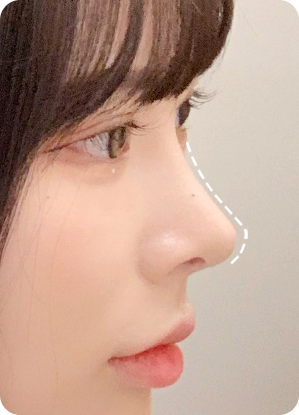
Good candidates
- Nostrils that are clearly visible from the front
- A nose-to-lip angle wider than about 110 degrees
- A tip that turned upward after a previous rhinoplasty
- A nose of normal length with an over-rotated tip
- A tip that looks blunt because it points up
Why the cause matters
If length is normal, repositioning the alar cartilage may be enough. If the nose is short or contracted, length must be added with a graft.
How the surgery is tailored
Alar cartilage repositioning
The upper part of the alar cartilage is released and fixed lower to bring the tip down.
Septal extension grafting
When the nose is short, autologous septal or rib cartilage is grafted to extend length and support the new tip angle.
Soft-tissue release
Tight scar or soft tissue, especially after previous surgery, is released so the tip can move down without tension.
Implants & autologous tissue
The right material depends on your skin, the condition of your nose and the shape you want. Your surgeon will explain the options at consultation.
| Material | Type | Typical use |
|---|---|---|
| Silicone | Implant | Raises the bridge and creates a smooth line |
| Gore-Tex | Implant | Porous surface lets tissue grow in for close adhesion |
| AlloDerm | Processed human dermis | Covers thin skin over the bridge or adds tip height |
| Ear cartilage | Autologous | Tip shaping and lengthening |
| Septal cartilage | Autologous | Tip projection and nose lengthening |
| Rib cartilage | Autologous | Strong support with ample volume, often for revision |
| Dermis & fascia | Autologous | Soft-tissue padding under thin skin, reduces implant show |
Upturned Nose Correction information
Times are typical and vary with each case. As with any surgery, bleeding, infection or inflammation can occur, and the degree differs between individuals. Your surgeon will explain risks and aftercare in detail.
Upturned Nose Correction: questions
What is the ideal nose-to-lip angle?
It varies by face and gender, but an angle well above 110 degrees usually makes the nostrils prominent. Your surgeon will plan an angle that suits your profile.
Is upturned nose correction the same as short nose surgery?
They are related. Upturned correction lowers rotation; short nose surgery adds length. Many patients need a combination.
My nose turned up after a previous surgery. Can it be fixed?
Yes, this is usually caused by contracture. It is corrected as a revision, typically with rib or septal cartilage support.
When does the tip look natural?
The tip often looks slightly higher or firmer at first and settles as swelling subsides over the following months.
Explore more
Send your photos, get an honest opinion
Share front and side photos on WhatsApp or KakaoTalk. A board-certified plastic surgeon will review your nose and suggest only what you need.