
Nose Tip Plasty in Korea
Refine the projection, rotation and shape of the nasal tip with your own cartilage.
Small changes, a different face
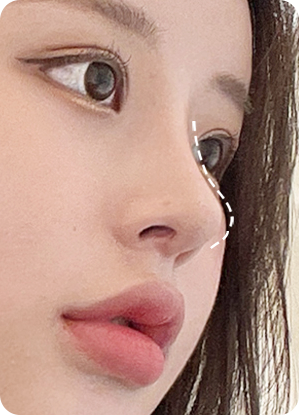
Nose tip plasty reshapes only the lower part of the nose: its height (projection), angle (rotation) and width. At YUNO it is performed with your own tissue, such as ear or septal cartilage, using suture and grafting techniques chosen after examining your tip cartilage and skin thickness.
The tip is where the eye lands first. A tip that is low, round, droopy or slightly upturned can be refined without an implant on the bridge, which suits patients who like their bridge but want a more polished finish.
Good candidates
- A low or under-projected tip
- A round or wide tip without definition
- A tip that droops or points slightly up
- A bridge you are happy with but a tip you are not
- Patients who prefer autologous tissue over implants
Why the cause matters
Projection, rotation and width are adjusted together. Changing one alone can make the others look worse, so the tip is designed as a unit.
How the surgery is tailored
Cartilage suturing
The alar cartilages are shaped and brought together with sutures to narrow and define the tip.
Cartilage grafting
Ear or septal cartilage is placed on the tip to increase projection and create a clean highlight.
Rotation control
Cartilage repositioning and support grafts set the tip angle that suits your profile.
Implants & autologous tissue
The right material depends on your skin, the condition of your nose and the shape you want. Your surgeon will explain the options at consultation.
| Material | Type | Typical use |
|---|---|---|
| Silicone | Implant | Raises the bridge and creates a smooth line |
| Gore-Tex | Implant | Porous surface lets tissue grow in for close adhesion |
| AlloDerm | Processed human dermis | Covers thin skin over the bridge or adds tip height |
| Ear cartilage | Autologous | Tip shaping and lengthening |
| Septal cartilage | Autologous | Tip projection and nose lengthening |
| Rib cartilage | Autologous | Strong support with ample volume, often for revision |
| Dermis & fascia | Autologous | Soft-tissue padding under thin skin, reduces implant show |
Nose Tip Plasty information
Times are typical and vary with each case. As with any surgery, bleeding, infection or inflammation can occur, and the degree differs between individuals. Your surgeon will explain risks and aftercare in detail.
Nose Tip Plasty: questions
Can I have tip plasty without a bridge implant?
Yes. Tip plasty uses your own cartilage and can be done alone if you are happy with your bridge height.
Which cartilage is best for the tip?
Ear and septal cartilage are commonly used. The choice depends on how much support and volume your tip needs.
How is tip plasty different from bulbous nose correction?
Bulbous correction focuses on removing width and soft tissue. Tip plasty covers a broader range, including projection and rotation.
How long does tip swelling last?
The tip is the slowest area to settle. Most swelling improves within weeks, while fine definition continues to develop over several months.
Explore more
Send your photos, get an honest opinion
Share front and side photos on WhatsApp or KakaoTalk. A board-certified plastic surgeon will review your nose and suggest only what you need.