Bulbous Nose Tip Correction in Korea
Slim a round, wide nasal tip so it finally matches a refined bridge.
Definition that starts at the tip
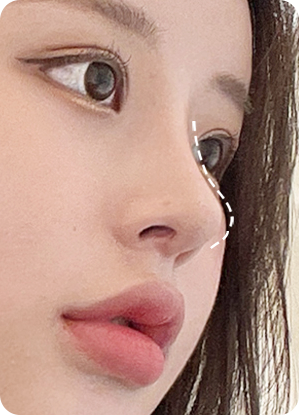
Bulbous nose correction refines a tip that looks round, wide or blunt. The cause is usually overdeveloped alar cartilage, cartilage that splays apart, or thick soft tissue and fat. YUNO identifies the main cause first, then trims and gathers cartilage or removes excess soft tissue accordingly.
If the tip stays bulbous, even a well-raised bridge can look heavy and the overall effect of rhinoplasty is reduced. Because several causes often occur together, the surgeon’s experience in reading the tip is what makes the difference.
Good candidates
- A tip with no clear border from the surrounding nose
- A tip that is high but still looks blunt
- A tip that looks wide because of thick fatty tissue
- A tip that is broad and flat
- Scar tissue from a previous rhinoplasty that made the tip bulky
Why the cause matters
Wide cartilage, splayed cartilage and thick skin each need a different technique. Correcting the wrong one leaves the tip as round as before.
How the surgery is tailored
Wide alar cartilage
Part of the broad cartilage is trimmed and the remaining cartilage is gathered inward to narrow the tip.
Splayed tip cartilage
The separated cartilages are brought together at the centre and an autologous cartilage graft is fixed on top for definition.
Thick soft tissue and fat
Excess subcutaneous fat and soft tissue are removed. The bridge can then be lifted with silicone and the tip shaped with your own cartilage.
Implants & autologous tissue
The right material depends on your skin, the condition of your nose and the shape you want. Your surgeon will explain the options at consultation.
| Material | Type | Typical use |
|---|---|---|
| Silicone | Implant | Raises the bridge and creates a smooth line |
| Gore-Tex | Implant | Porous surface lets tissue grow in for close adhesion |
| AlloDerm | Processed human dermis | Covers thin skin over the bridge or adds tip height |
| Ear cartilage | Autologous | Tip shaping and lengthening |
| Septal cartilage | Autologous | Tip projection and nose lengthening |
| Rib cartilage | Autologous | Strong support with ample volume, often for revision |
| Dermis & fascia | Autologous | Soft-tissue padding under thin skin, reduces implant show |
Bulbous Tip Correction information
Times are typical and vary with each case. As with any surgery, bleeding, infection or inflammation can occur, and the degree differs between individuals. Your surgeon will explain risks and aftercare in detail.
Bulbous Tip Correction: questions
Why does my tip look round even after rhinoplasty?
Often the bridge was raised but the bulbous tip itself was not corrected, or scar tissue formed at the tip. Identifying the cause is the first step in correcting it.
Can thick skin be made thinner?
Skin itself cannot be thinned dramatically, but excess fat and soft tissue under the skin can be removed and the tip structure strengthened so the shape shows through better.
Does bulbous tip correction require an implant?
Not always. The tip is shaped with your own cartilage. An implant is added only if you also want a higher bridge.
How long until the tip looks refined?
The basic shape shows once swelling subsides after the first weeks, but the tip is the last area to settle, so final definition develops over several months.
Explore more
Send your photos, get an honest opinion
Share front and side photos on WhatsApp or KakaoTalk. A board-certified plastic surgeon will review your nose and suggest only what you need.