
Revision Rhinoplasty & Contracted Nose in Korea
Find out why the first surgery did not work, then correct both appearance and function in one careful plan.
A last rhinoplasty, done right
Revision rhinoplasty is surgery to correct dissatisfaction with the shape or function of the nose after a previous operation. At YUNO the cause of the first result is analysed with 3D-CT, existing implants and scar tissue are assessed, and the nose is rebuilt with suitable materials, often autologous rib cartilage for strength.
In most cases revision is recommended at least six months after the last surgery, once tissue has softened. If inflammation or contracture is present, the cause is removed first and the revision is performed after the scar has matured. Timing always depends on the condition of your nose.
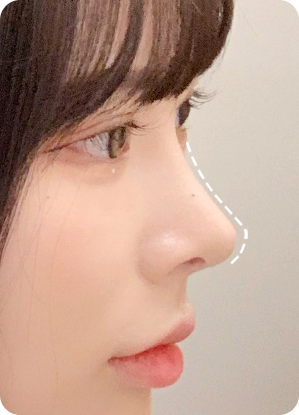
Good candidates
- A tip pulled up by contracture after implant surgery
- A tip or columella that leans to one side
- Nostrils that became asymmetric
- An implant that has shifted, bent or become visible
- A nose that became too short, too long, too low or too high
- Combined issues, such as asymmetric nostrils plus a pinched tip
Timing matters
Revision is generally planned six months or more after the previous surgery. With inflammation or contracture, the problem is treated first and the nose rebuilt once the scar has softened.
How the surgery is tailored
Cause analysis with 3D-CT
Implants, grafts, scar tissue and the septum are assessed to understand why the first surgery failed.
Removal and release
Problematic implants or contracted capsule tissue are removed and tight soft tissue is released.
Structural rebuilding
Strong autologous cartilage, often rib or septal cartilage, rebuilds support and length so the result stays stable.
Soft-tissue cover
Dermis or fascia can be used under thin, scarred skin to improve contour and reduce show-through.
What we correct
Contracted tip
The tip pulled upward by capsular contracture after implant surgery.
Deviated tip or columella
Only the tip bent, or the columella leaning to one side.
Asymmetric nostrils
Nostrils of different shape or size after earlier surgery.
Shifted implant
An implant that moved, tilted or shows through thin skin.
Too short or too long
A nose that became short and upturned, or too long and droopy.
Height problems
A bridge still too low, or too high with an upturned tip.
Implants & autologous tissue
The right material depends on your skin, the condition of your nose and the shape you want. Your surgeon will explain the options at consultation.
| Material | Type | Typical use |
|---|---|---|
| Silicone | Implant | Raises the bridge and creates a smooth line |
| Gore-Tex | Implant | Porous surface lets tissue grow in for close adhesion |
| AlloDerm | Processed human dermis | Covers thin skin over the bridge or adds tip height |
| Ear cartilage | Autologous | Tip shaping and lengthening |
| Septal cartilage | Autologous | Tip projection and nose lengthening |
| Rib cartilage | Autologous | Strong support with ample volume, often for revision |
| Dermis & fascia | Autologous | Soft-tissue padding under thin skin, reduces implant show |
Revision Rhinoplasty information
Times are typical and vary with each case. As with any surgery, bleeding, infection or inflammation can occur, and the degree differs between individuals. Your surgeon will explain risks and aftercare in detail.
Revision Rhinoplasty: questions
How soon after my first rhinoplasty can I have revision?
Generally at least six months, when tissues have softened. If there is inflammation or contracture, that problem is managed first and revision follows after the scar matures.
Why is rib cartilage often used for revision?
Rib cartilage is strong and provides enough volume, which is important when previous surgery has used up septal cartilage or contracture has shortened the nose.
Can a contracted, upturned nose be fully corrected?
Contracture can be significantly improved by releasing scar tissue and rebuilding length with strong cartilage. Your surgeon will explain realistic expectations after the 3D-CT review.
Should I bring records from my previous surgery?
Yes. Operation notes, the type of implant used and any previous scans help the surgeon plan more accurately.
Explore more
Rebirth Rhinoplasty
Our signature design for a nose that suits every angle.
Read moreShort Nose Lengthening
Add length with septal extension grafting.
Read moreUpturned Nose Correction
Lower a tip that shows too much nostril.
Read moreCrooked Nose Correction
Straighten bone and septum, improve breathing.
Read moreSend your photos, get an honest opinion
Share front and side photos on WhatsApp or KakaoTalk. A board-certified plastic surgeon will review your nose and suggest only what you need.